AI Becomes America's Birthday Gift as Nation Grapples With Safety Tradeoffs
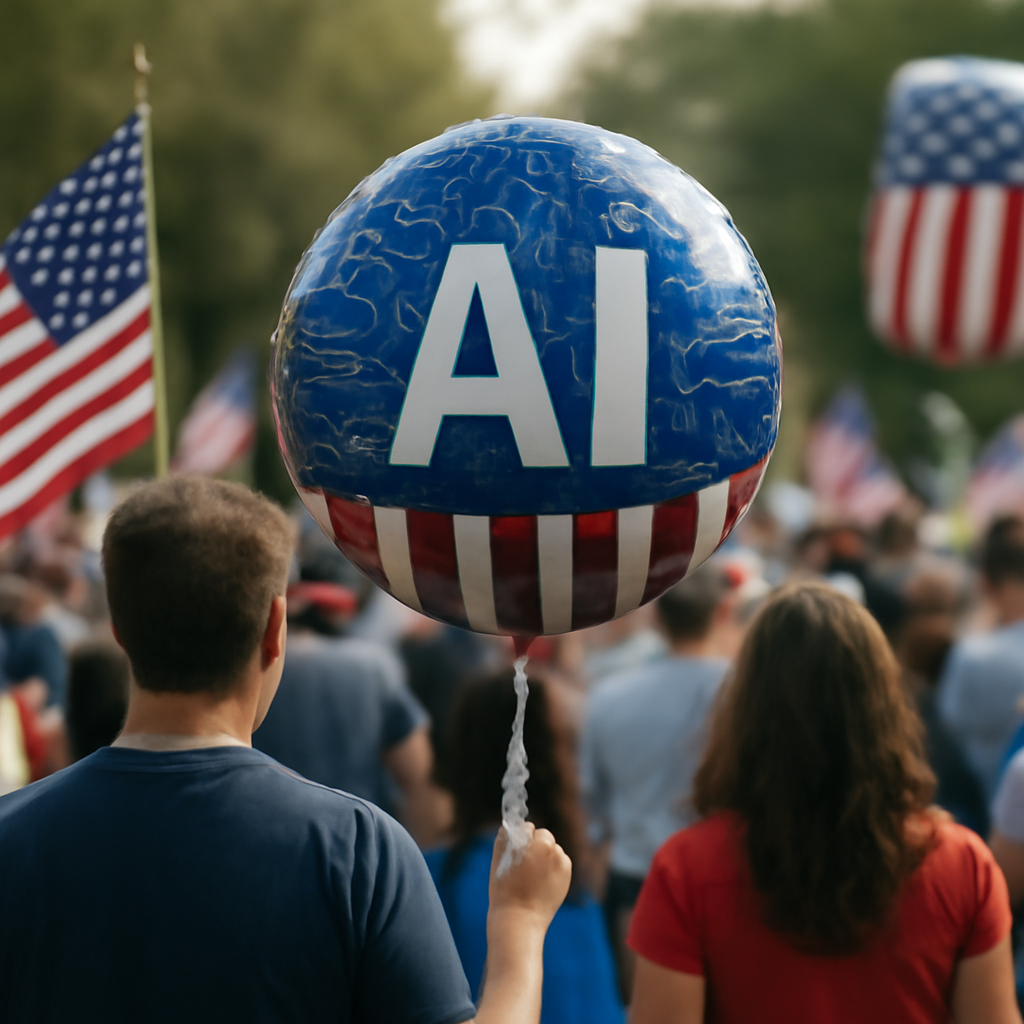
AMERICA'S 250TH: A NATION WRESTLING WITH ITS FUTURE THROUGH TECHNOLOGY, ART, AND SCIENCE
America's 250th birthday arrived this week not with unambiguous celebration but with a nation engaged in a profound debate about what comes next—and technology sits at the contested center of that conversation. The holiday itself became a Rorschach test for competing visions of American identity: NASA marked the milestone by releasing stunning photographs of distant galaxies and stellar nurseries, offering a moment of collective wonder, while Google simultaneously released a commercial imagining the Declaration of Independence written with AI assistance. The juxtaposition captures something essential about this particular American moment—one where we're simultaneously reaching for transcendent achievements and asking uncomfortable questions about whether machines should help us define who we are.
The technological anxiety running through this week's headlines reflects genuine stakes. As the Trump administration moves to weaken chemical safety rules and chemical accidents rise, the practical consequences of deregulation are already visible. Meanwhile, NASA launched an emergency mission to prevent the Swift Observatory from falling to Earth, a reminder that America's relationship with advanced technology involves constant crisis management as much as innovation. In the corporate sphere, Midjourney is demanding Hollywood studios reveal their AI usage while Jesse Eisenberg argues it would be "silly" to flee the country over Trump—a cultural figure asserting that engagement, not avoidance, remains the appropriate response to technological disruption. These aren't separate stories; they form a coherent picture of a nation where technological progress and technological risk have become inseparable.
The entertainment and cultural coverage reinforces this theme through different means. International film festivals are showcasing works that wrestle with modern alienation and hidden darkness beneath seemingly perfect surfaces—themes that resonate differently when Americans are simultaneously celebrating their nation's founding principles and fearing their erosion. The emphasis on European cinema and international storytelling, coupled with commentary about AI's impact on human creativity, suggests that American culture is increasingly defined by tension rather than consensus. Even the celebration itself became a technological test: AI-powered platforms helped coordinate America's 250th birthday festivities, turning the occasion into a live experiment in collective intelligence.
What's genuinely notable across these categories is not that technology is advancing or that America is divided—both have been true for years. Rather, it's that the nation's foundational questions about identity, safety, and progress are now being asked simultaneously in technological, political, and cultural registers. A pharmaceutical company signing a $600 million AI drug discovery deal, regulators weakening safety rules, a court potentially needing to choose between Trump and Obama in a referendum that never happened, mourners chanting revenge at a funeral—these are all variations on the same underlying question: who controls the future, and what do we trust to build it?
The clearest through-line came from NASA's celebration strategy. Rather than focusing exclusively on technological dominance or scientific breakthrough, the agency paired its stunning deep-space imagery with acknowledgment of research revealing pollution left behind by fireworks. The message seemed deliberate: American achievement deserves celebration, but not blindly. Wonder and caution, progress and consequence, must exist in the same frame. That balanced vision—rare in this week's headlines—may be precisely what this particular American moment requires.